
Arts and Recreation
The Kingston Trio in Concert at Park Theatre
Epic folk music trio is coming to Jaffrey, New Hampshire's Park Theatre on April 17.
 Photo courtesy of The Park Theatre
JAFFREY, New Hampshire (March 19, 2026) The Kingston Trio are folk music legends and they continue their tradition of bringing distinctive music to audiences worldwide by coming to the Monadnock region in April. They will be preforming on The Park Theatre stage in Jaffrey, New Hampshire, for a one-night performance on Friday, April 17, 2026 at 7:30 p.m. Tickets are $49 and $59. All seats are reserved.
Fans of celebrated folk icons The Kingston Trio can re-discover their timeless music all over again. In celebration of 60-plus years of music, the iconic folk group performs their best-loved songs as part of the 'Keep The Music Playing' national tour. All three current members, Mike Marvin, Tim Gorelangton and Paul Robinson, have intrinsic links to the original group: Mike is the "adopted son" of founding member Nick Reynolds, who was also his musical mentor; Tim, a friend of John Stewart since he was in his early twenties, is one of the few musicians outside the Trio who has recorded with Nick Reynolds; and Paul Robinson, who first picked up the guitar at the age of 10 after hearing a Kingston Trio record, and has had a rich historical connection to them for most of his life.
The Kingston Trio was one of the most prominent groups of the era's pop-folk boom that started in 1958 with the release of their first album and its hit recording of "Tom Dooley", which sold over three million copies as a single.
Cited as an influence by recording artists as musically and generationally diverse as Bob Dylan, Crosby, Stills & Nash and The Eagles to comedian and banjo player Steve Martin to contemporary artists such as the multi-Grammy® nominated Mumford & Sons and The Avett Brothers, The Kingston Trio occupies a unique, preeminent position in American musical history. The Trio released 19 albums that made Billboard's Top 100, 14 of which ranked in the top 10, and five of which hit the number 1 spot. Four of the group's LPs charted among the 10 top- selling albums for five weeks in November and December 1959, a record unmatched for more than 50 years, and the group still ranks in the all-time lists of many of Billboard's cumulative charts, including those for most weeks with a number 1 album, most total weeks charting an album, most number 1 albums, most consecutive number 1 albums, and most top ten albums.
Don't miss this rare opportunity to see The Kingston Trio in The Park Theatre's award-winning 330-seat Eppes Auditorium. Tickets are $49/$59 at the box office and $52/$62 online. All seats are reserved. They are on sale now at parknh.org/kingston-trio or at The Park box office (603) 532-8888.. The theatre is located at 19 Main Street in downtown Jaffrey. The facility is totally accessible. Beers, wines and alcoholic canned drinks are available in The Lounge at the theatre. ID is required. Traditional concessions as well.
Rebuilt and reimagined as a premier performing arts center, The Park Theatre hosts a dynamic mix of live performances, independent films, and arts-focused screenings. Located in historic downtown Jaffrey, it serves as a vibrant hub for the Monadnock Region's cultural scene.
Coming Up at Nova Arts in Keene
Friday, April 3, Special Benefit Concert with Olive Klug, Eve Pierce, and Happy Just to See You
On Friday, April 3, Nova Arts is proud to present a special benefit concert in support of reproductive healthcare access in New Hampshire. The Repro Fund Fundraiser will feature performances by Olive Klug, Eve Pierce, and Happy Just to See You, with all proceeds supporting the Reproductive Freedom Fund of NH's Fund-a-Thon campaign.
This event raises critical funds to help cover the cost of abortion and other reproductive health services across the state. More information, including ways to donate, can be found at reprofund.org.
Headlining the evening is Olive Klug, a singer-songwriter whose work blends emotional honesty with a deep commitment to social change.Also performing is Happy Just to See You, an indie rock band based in Southern New Hampshire and Boston, and opening the evening is Eve Pierce, a Peterborough-based folk singer-songwriter known for her imaginative and genre-blending approach to music.
Together, these artists bring a powerful night of music in support of an essential cause, fostering both community and meaningful impact through live performance.
And finally, on Saturday April 4, we present an electrifying night of experimental rock and boundary-pushing sound, featuring TAKAAT with a solo performance by Kal Marks' Carl Shane.
Headlining the evening is TAKAAT (pronounced "tuh-cot"), a trio made up of Ahmoudou Madassane, Mikey Coltun, and Souleymane Ibrahim, also known as the rhythm section of Mdou Moctar. Named after the Tamashek word for "noise," TAKAAT delivers a raw and explosive sonic experience rooted in improvisation, intensity, and fearless exploration.
Opening the night is Carl Shane, performing solo work from his long-running project Kal Marks. Known for its raw intensity and emotionally direct songwriting, Kal Marks has built a reputation for blending heavy, abrasive sounds with deeply personal lyricism. Together, TAKAAT and Carl Shane promise a night of immersive, high-energy performance that celebrates experimentation, collaboration, and the power of live music.
For both concerts, doors open at 7:00 p.m. and music begins at 7:30 p.m.!
Access For All tickets available thanks to support from Savings Bank of Walpole. (Note: To purchase more than one Access For All ticket, each must be done in a separate transaction.)
Shows are all ages and seating is first come first served.
Tickets and more info available at www.novaarts.org/events
Nova Arts is located at 48 Emerald St, Keene, NH.
Regional News
Senate Passes FARM Bill to Support the Farms That Feed Massachusetts
Makes farm-to-table programs permanent, combats federal cuts and climate change threats
(BOSTON—4/1/2026) Today, the Massachusetts Senate passed the FARM Bill, agricultural legislation aimed at supporting Massachusetts' 7,000 farms, making it easier for families to buy fresh and nutritious food, and protecting the state's food supply for the future.
The legislation—formally known as S.3029, An Act fostering agricultural resilience in Massachusetts—is a major step forward in supporting Massachusetts farmers and growing the state's agricultural economy. It builds on a recent special commission report focused on making Massachusetts agricultural operations sustainable for the 21st century.
The FARM Bill helps owners of small farms to grow their businesses by removing hurdles and making agritourism ventures possible, such as corn mazes and ‘pick your own' berry and fruit operations. The legislation also supports expanding farm operations with a local option property tax exemption for new agricultural buildings.
"Massachusetts relies on the farms and fisheries that put fresh, local food on our tables, and it's on us to make sure they can keep going and thrive," said Senate President Karen E. Spilka (D-Ashland). "This bill does exactly that. It helps farms stay open, makes it easier for families to buy fresh, local food, and strengthens our food system for the long run. When we support our farmers, we're supporting everyone in Massachusetts. I'm grateful to Chairs Rodrigues and Fernandes for their leadership, and to Senator Comerford for her steadfast advocacy on behalf of farmers across the Commonwealth."
"Today, the Senate took decisive action to bolster the Commonwealth's agricultural industry and also address persistent food insecurity in the Commonwealth," said Senator Michael J. Rodrigues (D-Westport), Chair of the Senate Committee on Ways and Means. "Farmland is one of the most tangible assets we have in the state, and this bill protects and ensures the future of farms for generations to come. By codifying essential food nutrition programs, we strengthen our food assistance safety net that is threatened by both the uncertainty at the federal level and the continuing effects of the pandemic. I'm especially proud that we also strengthen our vital cranberry industry, Massachusetts' most valuable agricultural product. I would like to thank Senate President Spilka for her leadership, and also Vice Chair Comerford and Senator Fernandes for their work and leadership on this bill and their steadfast support of the agricultural community."
The bill makes it easier for residents to access healthy food, making permanent the Healthy Incentives Program (HIP) to help families afford fresh produce and the Farm to School program to bring local ingredients into schools. By codifying these programs, the Senate is continuing its response to federal actions that threaten food access as a part of the Senate's Response 2025 initiative. A further Response 2025 priority requires that state emergency planning efforts prioritize the security of the local food supply chain given federal cuts to emergency planning.
The FARM Bill additionally requires regular reporting on the distribution of local produce through food banks, universal school meals, Meals on Wheels, the Massachusetts Emergency Food Assistance Program (MEFAP), and other food assistance programs. This data will help assesses the damage from detrimental federal actions such as the elimination of the USDA Local Food Purchase Assistance Cooperative Agreement Program, which purchased food from historically underserved Massachusetts farmers and provided it to underserved communities.
"As Chair of the Joint Committee on Agriculture and Fisheries, I'm proud to support the Senate's effort to build a more resilient and sustainable food system in the Commonwealth," said Senator Dylan A. Fernandes (D-Falmouth), Senate Chair of the Joint Committee on Agriculture and Fisheries. "The FARM Bill will expand access to fresh, locally grown food while putting more money into the hands of our farmers and fishermen. By reducing costs, strengthening supply chains, and expanding reliable markets, this legislation makes strategic investments into an industry that is essential for our economy, environment, and the health of our communities. I'm deeply grateful to Senator Comerford for championing this bill and to the work of the Senate President and Ways and Means Chair for bringing it to the floor."
"Today, the Senate advanced urgently-needed legislation to support the farms, producers, and fisheries that are the foundation of our local and regional food systems," said Senator Jo Comerford (D-Northampton), co-Chair of the Special Commission on Agriculture in the 21st Century and Senate Vice Chair of the Joint Committee on Agriculture and Fisheries. "In western and north central Massachusetts, where agriculture is core to our economy and identity, we know that when we lose farmland, we lose far more than fields--we lose livelihoods, food security, and community. This legislation reflects the recommendations of the Special Commission on Agriculture in the 21st Century--a body that I was proud to co-chair. I'm grateful to Senate President Karen Spilka and Ways and Means Chair Mike Rodrigues for their steadfast leadership. With the FARM Bill, Massachusetts is stepping up--investing in the next generation of farms and fisheries while ensuring more local, nutritious food reaches Massachusetts families."
The legislation includes key provisions to help farmers remain viable and expand their operations. New farm buildings and structures would receive a five-year property tax exemption under a local option program added to the bill today. Senators voted 38-0 to adopt the property tax exemption (Amendment 5).
The bill also expands opportunities for farmers to participate in agritourism, makes the Food Security Infrastructure Grant (FSIG) Program permanent, and eases the water permitting process for cranberry growers.
The FARM Bill includes forward-looking initiatives to protect farmland and improve long-term planning by creating a statewide agricultural land database and improving the evaluation of the Agricultural Preservation Restriction (APR) program to ensure long-term sustainability.
It directs emergency planning efforts to prioritize local food production and avoid supply chain disruptions, and explores renewable energy opportunities on farmland, balancing clean energy goals with agricultural land preservation.
The Senate Committee on Ways and Means advanced the legislation to the full Senate with a 16-0 vote on March 23, 2026. All committee votes are posted on the Legislature's website and full details of the legislation are available in a fact sheet in the Senate Press Room.
The Senate passed the bill on a 39-0 roll call vote and sent it to the House of Representatives for further review.
Financial Focus®
Four stages of raising confident, money-smart kids
Good financial habits are a little like brushing your teeth. When you learn them early, they become second nature, and you carry them with you for life. And while money can feel complicated, especially today, the foundation starts simply.
Parents can begin the conversation with very young children, and young adults can build on those basics as they take on more responsibility. Step by step, these habits create confidence that helps build long-term financial security and a more fulfilling life.
The following are the four key stages of financial growth.
Stage 1: For very young children, the goal is to make money feel simple and manageable. A great place to start is with three jars labeled "Spend," "Save" and "Share." When kids can actually see their money grow or shrink, the idea starts to make sense. Saving also introduces them to goal-setting, and working toward paying for a small toy or outing teaches patience. Most important, you're helping your children see money as a tool they can understand easily and use with confidence.
Stage 2: If you have tweens (children roughly 9 to 12 years old), they're usually ready for slightly bigger financial ideas. This is a great time for them to earn money through chores or small jobs, helping them see the connection between effort and reward and building a sense of ownership. Conversations about needs versus wants also become more meaningful, because kids are now making real choices with money they earned themselves. Your tween may be ready for a simple savings account to watch their savings grow, or a reloadable cash card for spending.
Stage 3: By the time teens reach high school or young adulthood, budgeting becomes essential. This doesn't need to be overly strict or complicated. A simple system that helps them track deposits and withdrawals can make all the difference. Whether they use an app, a paper notebook or a spreadsheet, the real goal is awareness. Teenagers also benefit from learning how credit works. Understanding how to build a healthy credit score and how to use credit wisely protects them from costly mistakes in later life.
Stage 4: Then come the early working years, when habits shift from learning to building. One of the smartest steps at this stage is paying yourself first. Automatic transfers to savings or retirement accounts help establish stability without extra effort. Even small retirement contributions matter more than most people realize, because time allows compounding to do the heavy lifting. This is also when young adults can start organizing their money into different buckets for rent, automobile payments, emergencies, retirement and everyday spending. These habits help lay the groundwork for financial freedom down the road.
Throughout every stage, the theme is confidence. Each small success creates a sense of control and each good habit makes the next one easier. Over time, these habits turn into a lifetime of financial security and fulfillment. When you start strong and stay consistent, money becomes a tool that helps your children support the lives they want.

This content was provided by Edward Jones for use by Jordyn Lynds, your Edward Jones financial advisor at 978-297-7452 or stop by 113 Central St. Winchendon, MA 01475.
Edward Jones is a licensed insurance producer in all states and Washington, D.C., through Edward D. Jones & Co., L.P. and in California, New Mexico and Massachusetts through Edward Jones Insurance Agency of California, L.L.C., Edward Jones Insurance Agency of New Mexico, L.L.C., and Edward Jones Insurance Agency of Massachusetts, L.L.C.
Gardening
Add Some Homegrown Flavor to Your Gatherings
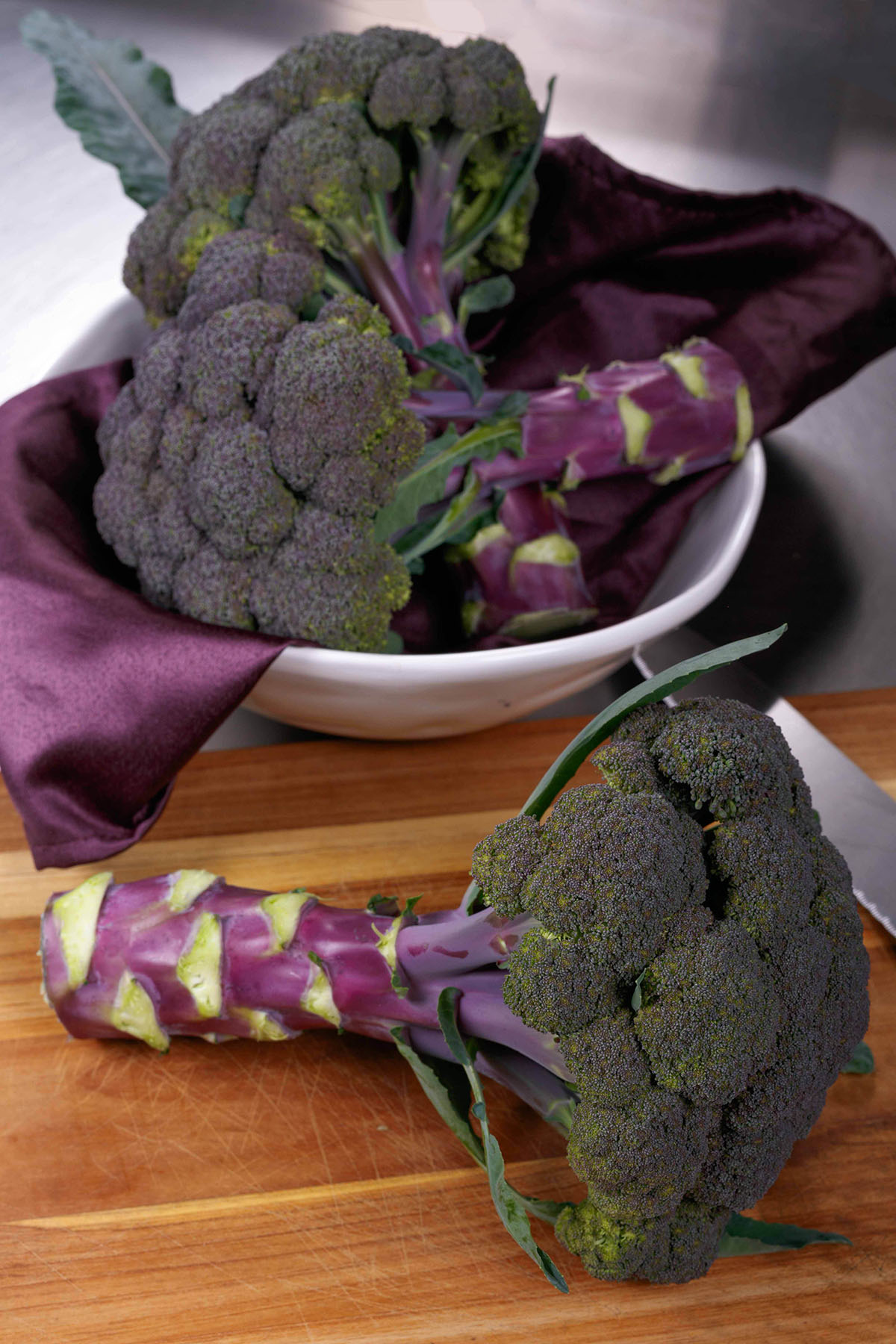
Purple magic broccoli adds color and interest to gardens and meals.
Photo courtesy of All-America Selections
Fill your crudités platters with vegetables grown in your own garden and containers. Arrange the raw vegetables neatly on a platter or board and add a homemade dip seasoned with fresh herbs. Your family and guests are sure to enjoy the selection and fresh flavor.
Look for opportunities to grow and share your favorite vegetables at gatherings with friends and families. Many vegetables work well in containers and small compact varieties make it easy to include them in just about any size garden.
Create an attractive display with seasonal bite-sized vegetables that are easy for guests to enjoy. Snap peas, radishes, and carrots are most readily available during the cooler months of spring and fall.
As the season progresses, include broccoli and cauliflower florets. Try growing some purple varieties like purple magic broccoli, purple crush and amethyst purple cauliflower. Blanch them in cold water to bring out the color.
By mid to late summer, you'll have tomatoes, peppers and cucumbers to include. Grow some colorful cherry tomatoes like sunset torch with excellent flavor and unique yellow with orange striped fruit. The compact patio choice yellow and fantastico red cherry tomatoes are the perfect size for containers and fit in any size garden.
Plan to grow a few small peppers like pick-n-pop, lunchbox, just sweet, and yum yums or include slices of your favorite sweet peppers. Make room in your garden to grow a few miniature cucumbers like Persian and green light with thin skins and crispy mild flavor.
Fill the voids in your platter with seasonal and colorful fruit like grapes, raspberries and strawberries. Add a little crunchy, flavorful food confetti to the mix with homegrown microgreens. Sunflower microgreens remain firm and have a nutty flavor that is similar to the seeds. Spice things up a bit with radish greens and add welcome color with red cabbage and bull's blood beet greens. Your microgreens are ready to harvest in just 10 to 14 days after planting. Also use them to add some of your own homegrown flavor when you have to purchase vegetables at the farmer's market or grocery store.
Anchor the platter with a bowl of dip. Even a simple dip of sour cream, mayonnaise and chives will work. Add more complex flavor by adding additional homegrown herbs like basil, dill and oregano to your favorite dip base. Experiment with various combinations of what's available from your container and in-ground gardens.
Be flexible. As a gardener you know plants do not always follow the descriptions on the seed packet or label. Cooler than normal weather can delay the harvest while hotter than normal weather can speed things up. Just enjoy what is ready and supplement with what you purchase at the farmer's market or grocery store.
Melinda Myers has written over 20 gardening books, including The Midwest Gardener's Handbook, 2nd Edition and Small Space Gardening. She hosts The Great Courses "How to Grow Anything" instant video series and the nationally-syndicated Melinda's Garden Moment radio program. Myers is a columnist and contributing editor for Birds & Blooms magazine and was commissioned by Wild Valley Farms for her expertise to write this article. Myers' website is www.MelindaMyers.com.