
Arts and Recreation
Park Theatre Presents One-Night-Only Performance of Hilarious Interactive Comedy "Late Nite Catechism" as Part of National Tour
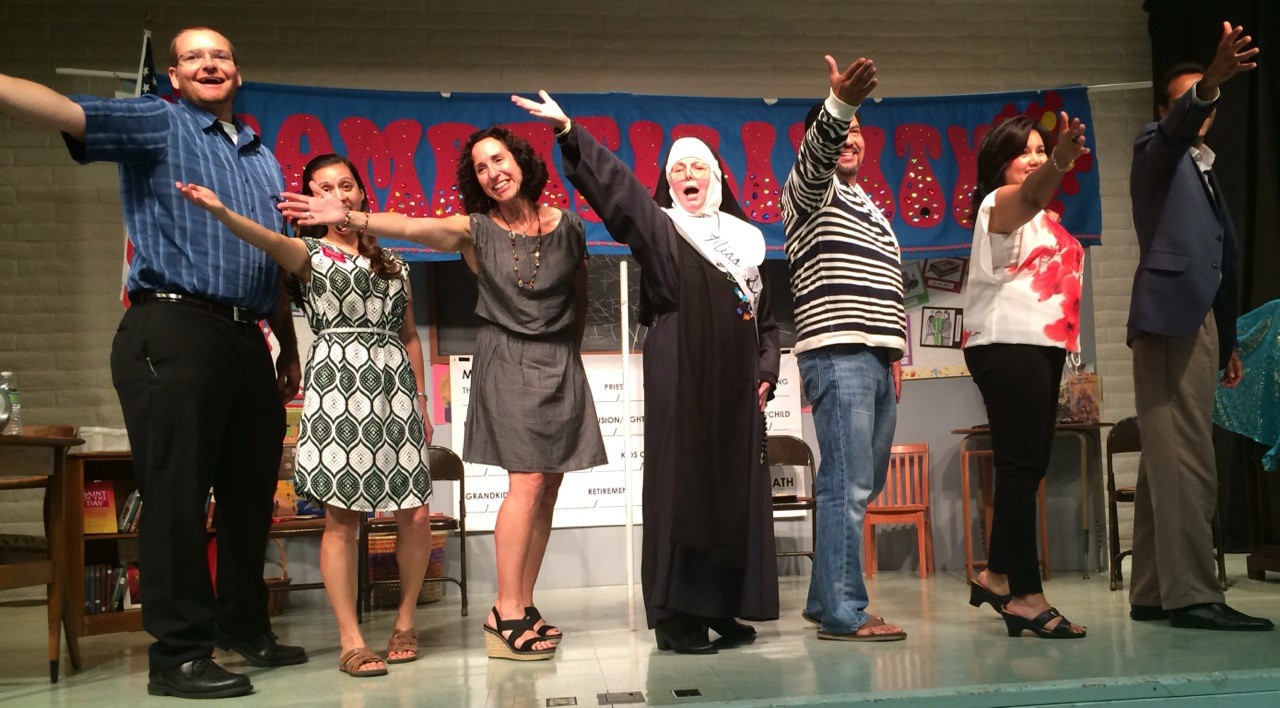 Photo courtesy of The Park Theatre
JAFFREY, New Hampshire (July 10, 2026) The Park Theatre in Jaffrey, New Hampshire, is thrilled to welcome the national tour of the acclaimed comedy Til Death Do Us Part: Late Nite Catechism for a special one-night-only engagement on Saturday, August 1, 2026, at 7:30 p.m.
In this uproarious third installment of the beloved Late Nite Catechism series, the irrepressible "Sister Elizabeth Mary Grace Murphy" holds court in a lively, interactive evening that turns the audience into her catechism class. With plenty of audience participation, Sister delivers hilarious lessons on the Sacraments of Marriage, relationships, and the Last Rites--blending sharp wit, Catholic nostalgia, and compassionate humor that resonates with audiences of all backgrounds. Expect glow-in-the-dark rosaries, saint cards, and plenty of laughs as Sister shifts from benevolent instructor to authoritative drill sergeant.
The Late Nite Catechism franchise, created by Vicki Quade and Maripat Donovan, is one of the most successful and longest-running theatrical comedy series in American theater history. Since its debut in the early 1990s, the show has entertained millions, raised significant funds for retired nuns, and become a pop culture phenomenon known for its playful send-up of Catholic school experiences. The series has earned widespread critical acclaim, numerous awards (including Drama-Logue Awards and other honors for its performers and production), and a devoted following for its unique blend of interactive comedy and heartfelt storytelling.
"This is the class you actually want to attend," say fans of the show, which continues to delight audiences across the country with its timeless humor and engaging format.
Tickets for the August 1 performance are priced at $35, $55, and $68 and are available now through The Park Theatre box office. For tickets and more information, visit theparktheatre.org or call the box office (603) 532-8888.
The Park Theatre, New England's unique showplace for live performance and film, is located at 19 Main Street in Jaffrey, NH. Don't miss this unforgettable evening of laughter and faith-inspired fun!
Doors to the theatre open at 6pm with Harold Thomas McCarthy playing in the theatre's Lounge Room (free admission). Beer, wine and canned cocktails are available, ID required.
The Park Theatre performing arts center is located at 19 Main Street in downtown Jaffrey, New Hampshire, just 90 minutes from Boston and 60 minutes from Worcester.
Iconic Comedian Paula Poundstone Brings Her Signature Wit to The Park Theatre in Jaffrey, NH
JAFFREY, New Hampshire (July 10, 2026) Legendary stand-up comedian, author, and commentator Paula Poundstone is coming to The Park Theatre in Jaffrey, New Hampshire for one unforgettable night of sharp observational humor and spontaneous wit on Friday, August 7 at 7:30 p.m.
Known for her razor-sharp intelligence, offbeat charm, and legendary ability to interact with audiences, Poundstone has been a fixture in American comedy for over four decades. She began performing stand-up in Boston in 1979 and quickly rose to prominence with a string of acclaimed HBO comedy specials, including Cats, Cops and Stuff, which earned her the Cable ACE Award for Best Comedy Special--making her the first female stand-up to win the honor.
Poundstone's career highlights include being the first female comic to host the White House Correspondents' Dinner. She provided live commentary and coverage of the 1992 Democratic and Republican National Conventions as well as the Presidential Inaugural for The Tonight Show with Jay Leno. She has also appeared at the Emmy Awards and voiced the memorable character "Forgetter Paula" in Pixar's Inside Out and Inside Out 2.
For many years, Poundstone has been a beloved regular panelist on NPR's award-winning weekly news quiz show Wait Wait... Don't Tell Me!, where her quick wit and hilarious insights have entertained millions of listeners. She previously hosted the NPR program Live from the Poundstone Institute and currently hosts the popular comedy podcast Nobody Listens to Paula Poundstone with Adam Felber.
"Paula Poundstone is a national treasure," said Steve Jackson, CEO of The Park Theatre. "Her live performances are legendary--equal parts hilarious storytelling, audience interaction, and brilliant social commentary. This is a must-see evening for comedy fans in New England."
Tickets are $45, $55, and $65 and are available now at theparktheatre.org/paula-poundstone or by calling the box office (603) 532-8888.
For more information about Paula Poundstone, visit paulapoundstone.com.
Paula Poundstone is an American treasure whose comedy continues to resonate with audiences nationwide. Don't miss this rare opportunity to see her live at The Park Theatre this August!
Doors to the theatre open at 6:00 p.m. with Kyle Trombley at the Steinway piano in the theatre's Lounge Room (free admission). Beer, wine and canned cocktails are available, ID required.
The Park Theatre performing arts center is located at 19 Main Street in downtown Jaffrey, New Hampshire, just 90 minutes from Boston and 60 minutes from Worcester. Don't miss this unforgettable evening of laughter and faith-inspired fun!
Regional News
Second Chance Animal Services Receives $150,000 Grant from the ASPCA to Expand Access to Veterinary Care Through New Community Support Vehicle
Funding will assist with expenses related to purchasing a mobile veterinary unit that brings care directly to pets and families in need
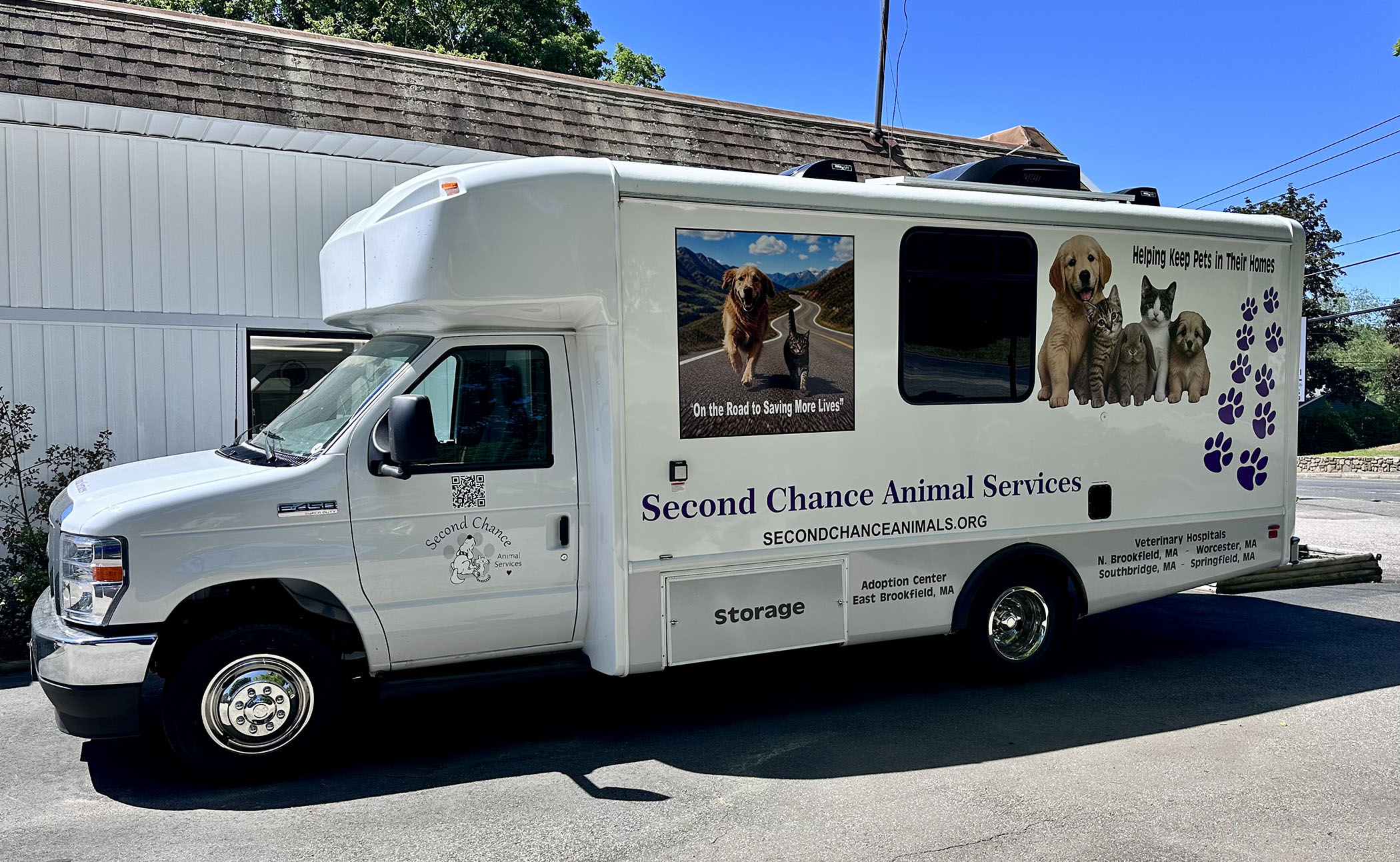
Photo courtesy of Second Chance Animal Services
EAST BROOKFIELD, MA. - Second Chance Animal Services has been awarded a $150,000 grant from the ASPCA® (The American Society for the Prevention of Cruelty to Animals®) to support the purchase of a new Community Support Vehicle, a mobile veterinary unit that will expand access to care for pets and families who may otherwise face barriers to receiving veterinary services.
The grant will help Second Chance Animal Services fund this important capacity-building initiative, allowing veterinary teams to bring preventive and basic veterinary care directly into more communities, assisting pet owners, and supporting programs that help keep pets healthy, at home, and out of shelters. The mobile veterinary unit will extend the reach of Second Chance's community programs, serving pets and families across the region.
"Access to veterinary care should never depend on a family's ability to travel or overcome transportation barriers," said Sheryl Blancato, Chief Executive Officer of Second Chance Animal Services. "We are incredibly grateful to the ASPCA for this generous investment. This Community Support Vehicle will allow us to provide basic veterinary care on the road and connect pets needing more advanced treatment to our hospitals. Together, these services help keep pets healthy, with the families who love them, and out of shelters."
"Lack of access to affordable veterinary care is among the top reasons families are forced to make the heartbreaking decision to relinquish their pet to a shelter," said Karen Walsh, vice president of animal relocation at the ASPCA. "The ASPCA is honored to provide Second Chance Animal Services with grant funding for a new mobile veterinary vehicle to expand their lifesaving work providing critical veterinary care to the community and helping to keep animals healthy and in loving homes."
For more than 16 years, Second Chance Animal Services has been meeting pets and families where they are through community outreach programs designed to remove barriers to veterinary care. The new mobile veterinary unit will build upon those efforts by tripling the capacity to bring clinics directly into underserved neighborhoods, assisting pet owners who may not be able to travel to veterinary hospitals, and supporting community-based programs that help prevent unnecessary pet surrender.
The vehicle will be on the road at low-cost vaccine clinics across the state. In addition, it will be instrumental in the nonprofit's Homebound to the Rescue program which brings veterinary care at low-cost or no-cost to senior and low-income communities. By intervening early and providing resources before a crisis occurs, the organization can help keep pets healthy and safely in their homes.
The need for these services is evident in stories like those of seniors and individuals with disabilities who deeply love their pets but struggle to care for them. Through its community programs, Second Chance has helped pet owners access veterinary services that allowed them to keep beloved companions by their side. The new Community Support Vehicle will make it possible to reach even more families with the support they need before difficult circumstances force them to consider surrendering a pet.
For more information about Second Chance Animal Services, please visit www.secondchanceanimals.org.
Since 2001, the ASPCA has provided more than $250 million in grant funding to thousands of animal shelters, municipal and government agencies, rescue groups and other organizations nationwide. Grants are just one example of how the ASPCA is helping animals and communities in need, with funds supporting a variety of programs ranging from increasing pet adoptions to helping communities build strong programs to rescue, shelter, transport, and support animals during natural disasters, improving access to veterinary care, and advancing research that either directly or systemically benefits animals. For more information about the ASPCA's grant-making and current initiatives, visit www.aspcapro.org/grants.
Financial Focus®
The Hidden Danger of Investing Too Cautiously
One of the most significant risks investors face isn't losing money in a market dip; it's failing to reach their long-term financial goals.
Many people focus heavily on short-term losses in the stock market and try to protect their savings by investing conservatively or avoiding stocks altogether. But that runs the risk that their savings won't grow enough to keep up with inflation or support future needs.
Understanding what investment risk really means helps you make smarter financial decisions, considering these three key aspects.
- Risk tolerance describes your emotional comfort with risk. If you'd want to pull your money out of the market during a downturn, that reveals something about your tolerance. Many financial advisors use questionnaires to help clients understand how they might react in different market conditions.
- Risk capacity refers to how much risk you can afford to take. Your timeline matters. A 35-year-old saving for retirement has decades to ride out market swings. A retiree drawing income from their portfolio doesn't have that same cushion.
- Required risk describes how much risk you may need to take to reach your financial goals. Higher returns generally come with higher risk, though higher risk does not guarantee higher returns. If you need strong growth to retire comfortably, you may need to accept more short-term volatility.
Balance and diversification matter: Finding the right balance matters more than you might think. A small difference in your annual rate of return, from 5% to 7% for instance, doesn't just add up a little. It multiplies. That's the power of compounding--returns earning their own returns, year after year, building on an ever-growing base. Over 30 or 35 years, that can become significant.
You needn't choose between playing it so safe your money barely keeps up with inflation and taking on more risk than you're comfortable with. Instead, a balanced mix can fit your comfort level and still help grow your money over time.
The age factor: You'll want to adjust your approach to risk as you get older. If retirement is years away, your portfolio may lean toward growth investments like stocks and stock mutual funds; you have time to absorb short-term losses and benefit from long-term gains. Lower risk investments like bonds still play a role because they can help smooth out changes in your portfolio's value.
As you near retirement, your portfolio may shift toward a more even mix of stocks and bonds to limit exposure to large market swings. The goal is to protect what you've built while still generating enough growth to fund a retirement that could last decades.
Investing well isn't about eliminating risk; it's about taking the right amount of it. Too little risk can be just as damaging as too much. A financial advisor can help you find the balance that matches your comfort level, your financial situation and your long-term goals.
Investors should understand the risks involved with owning investments, including interest rate risk, credit risk and market risk. The value of investments fluctuates and investors can lose some or all of their principal.
This content was provided by Edward Jones for use by Jordyn Lynds, your Edward Jones financial advisor at 978-297-7452 or stop by 113 Central St. Winchendon, MA 01475.
Edward Jones is a licensed insurance producer in all states and Washington, D.C., through Edward D. Jones & Co., L.P. and in California, New Mexico and Massachusetts through Edward Jones Insurance Agency of California, L.L.C., Edward Jones Insurance Agency of New Mexico, L.L.C., and Edward Jones Insurance Agency of Massachusetts, L.L.C.
Gardening
Managing Aphids, a Common Garden Insect
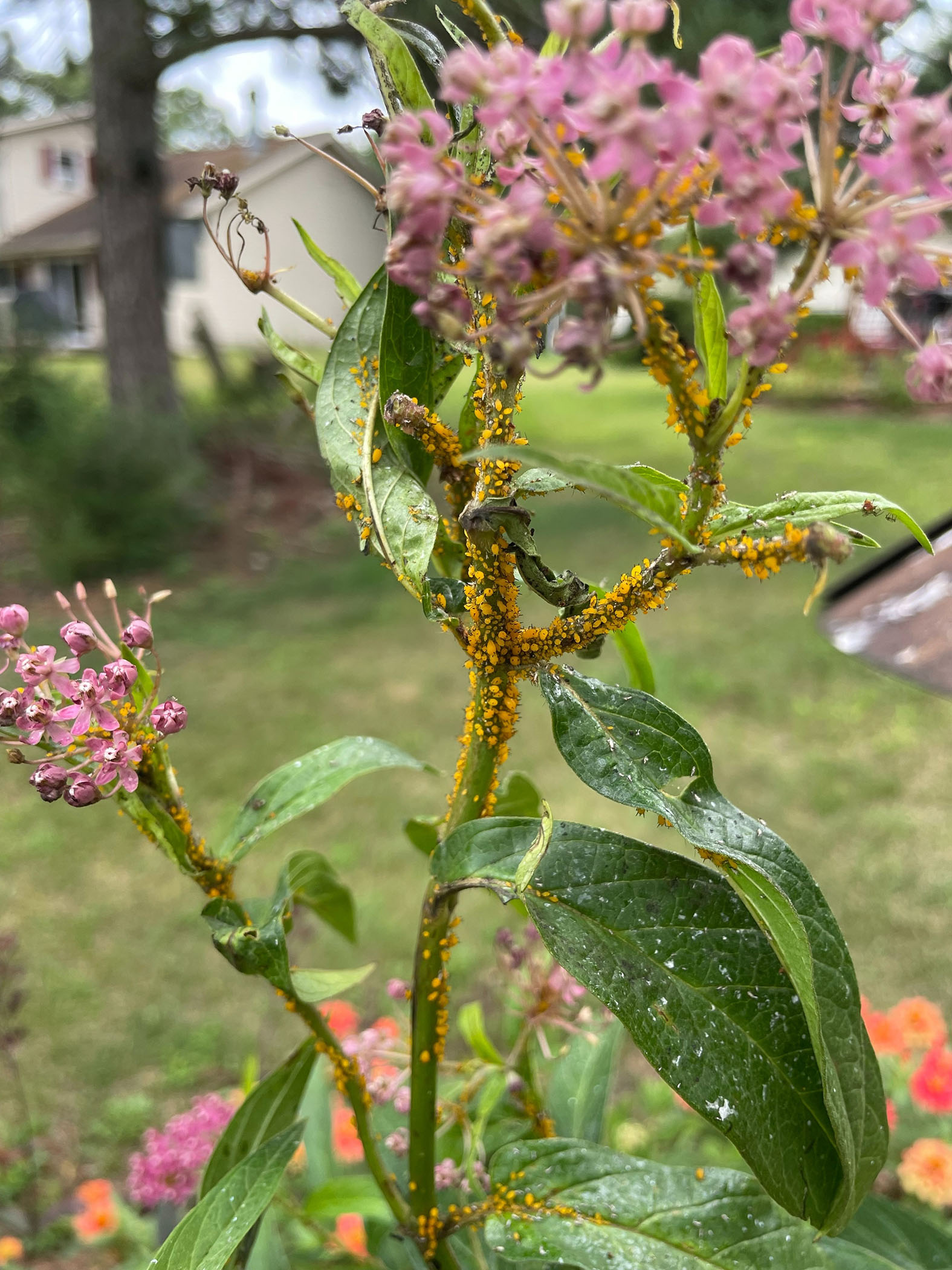
Aphids feeding on a plant.
Photo courtesy of www.MelindaMyers.com
If you garden, you have likely encountered aphids on trees, shrubs or other garden plants in your landscape. Identifiable by their small teardrop-shaped bodies with cornicles, the two tail pipe-like structures that protrude from their back end. They come in a variety of colors, with or without wings, and some like the cabbage and wooly aphids are covered with a gray or white waxy substance.
These insects feed on leaves, stems, flowers and roots by sucking the plant sap through a needle-like mouthpart. Some aphid species transmit diseases including cauliflower, cucumber, lettuce, tobacco and turnip mosaic viruses, plum pox and potato virus Y. Aphids, like whiteflies, scale and mealybugs, excrete a clear sticky substance called honeydew. It often covers the leaves, branches and objects beneath the plant. You may see ants, bees, yellow jackets, and flies feeding on the honeydew. Some species of ants protect the aphids from predators, move them to another plant when a new food source is needed and some create shelters or share their nest with the aphids.
As the population grows damaged plants may develop bent and twisted leaves. When large colonies of aphids are present the plant may be wilted, stunted or new growth distorted. A black substance called sooty mold may develop on the leaves. This fungus feeds on the honeydew not the plant. A thick layer of sooty mold can prevent light from reaching the leaves, causing them to turn yellow and drop. Managing the aphids will help manage this problem.
Before reaching for a chemical watch for nature's pest managers to move in and take care of the problem. Predatory insects, like lady beetles, lacewings and hover fly larvae, eat aphids. One lady beetle can consume more than 5,000 aphids throughout all stages of its life.
If nature is not handling the problem, try spraying the infested plant with a strong blast of water. This knocks many of the aphids off the plant and may provide sufficient control. Follow this, if needed, with an organic product such as a lightweight horticulture oil or insecticidal soap. These insecticides must contact the insect to kill it. They block the spiracles, small air holes in the insects' exoskeleton, causing asphyxiation. The horticulture oil, like Year-Round Spray Oil, kills all stages of the insect it contacts but will not harm any beneficial insects that land on the treated plant. Repeat as needed and as always read and follow all label directions for these and any organic, natural or synthetic chemical.
Keep your plants healthy with proper care to reduce the risk and avoid overfertilization that promotes lush succulent growth, which is more susceptible to insect and disease problems.
Melinda Myers has written over 20 gardening books, including The Midwest Gardener's Handbook, 2nd Edition and Small Space Gardening. She hosts The Great Courses "How to Grow Anything" instant video series and the nationally-syndicated Melinda's Garden Moment radio program. Myers is a columnist and contributing editor for Birds & Blooms magazine. Her website is www.MelindaMyers.com.