
Arts and Recreation
Red Apple Farm Sunflower Festival Coming Up August 8-9 and August 15-16
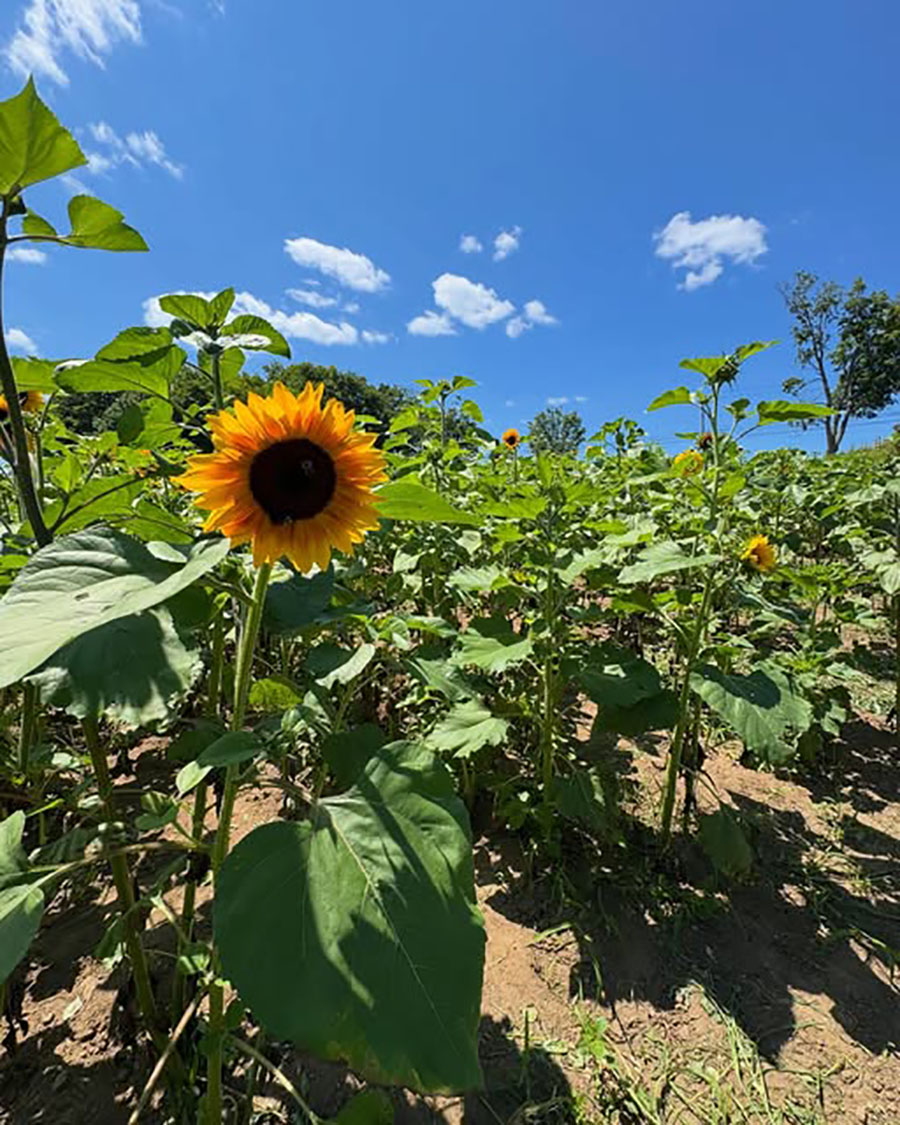 Photo copyright Red Apple Farm
Sunflower season is one of New England's brightest summer traditions, and there's no better place to celebrate than Red Apple Farm's Sunflower Festival Weekends! Held over two weekends, August 8-9 and August 15-16, the festival features live music, hands-on crafts, farm-fresh treats, and family-friendly activities that celebrate peak late-summer sunshine.
Guests can learn how to build the perfect sunflower arrangement during a special daily flower demonstration presented with MacMannis Florist & Greenhouses, design sunny keepsakes, hop into old-fashioned farm games,or listen to live music on both the Brew Barn and Cidery stages all day long.
We're also thrilled to introduce Red Apple Farm's newest addition, a Little Free Library! It's a fun, cozy feature for community members of all ages, stocked with local book donations ranging from thrillers and fantasy to gardening guides and kids' stories. Visitors are invited to bring a book, leave a book, and grab a special Red Apple Farm sunflower bookmark before finding a spot under the Cider Garden trees to relax and read.
Whether you're visiting for pick-your-own sunflowers, blueberries, and raspberries, the music, the crafts, or simply a fun summer outing with family and friends, there's something happening around every corner during our Sunflower Festival Weekends.
Festival Schedule
- 10:00 AM - Festival Begins
- 12:00 PM - Sunflower Bouquet Demo with MacMannis Florist (Cider Garden)
- All Day - Live Music on the Brew Barn & Cider Stages
- All Day - Family Activities & Little Free Library Reading Spot
- Sunflower Bouquet Demo with MacMannis Florist & Greenhouses (12:00 PM in the Cider Garden - learn how to turn fresh sunflowers into a stunning arrangement, plus purchase everything you need to build your own!)
- Live Music All Day on the Brew Barn & Cider Stages
- Red Apple Farm's New Little Free Library (Take a book, leave a book!)
- What Makes You Bloom Affirmation Wall
- Wooden Bumblebee & Butterfly Coloring Station
- Sunflower Rock Painting
- Burlap Sack Races
- Sunflower Coloring Pages
- Farm-fresh food, hard cider, homemade treats, and more
Regional News
32 Acres, One Deadline, and a Grant That Made It Possible
North Central MA Community Foundation Helps North County Land Trust Conserve 32 Acres of Land
The property at High Meadow Farm
Photo courtesy of CFNCM
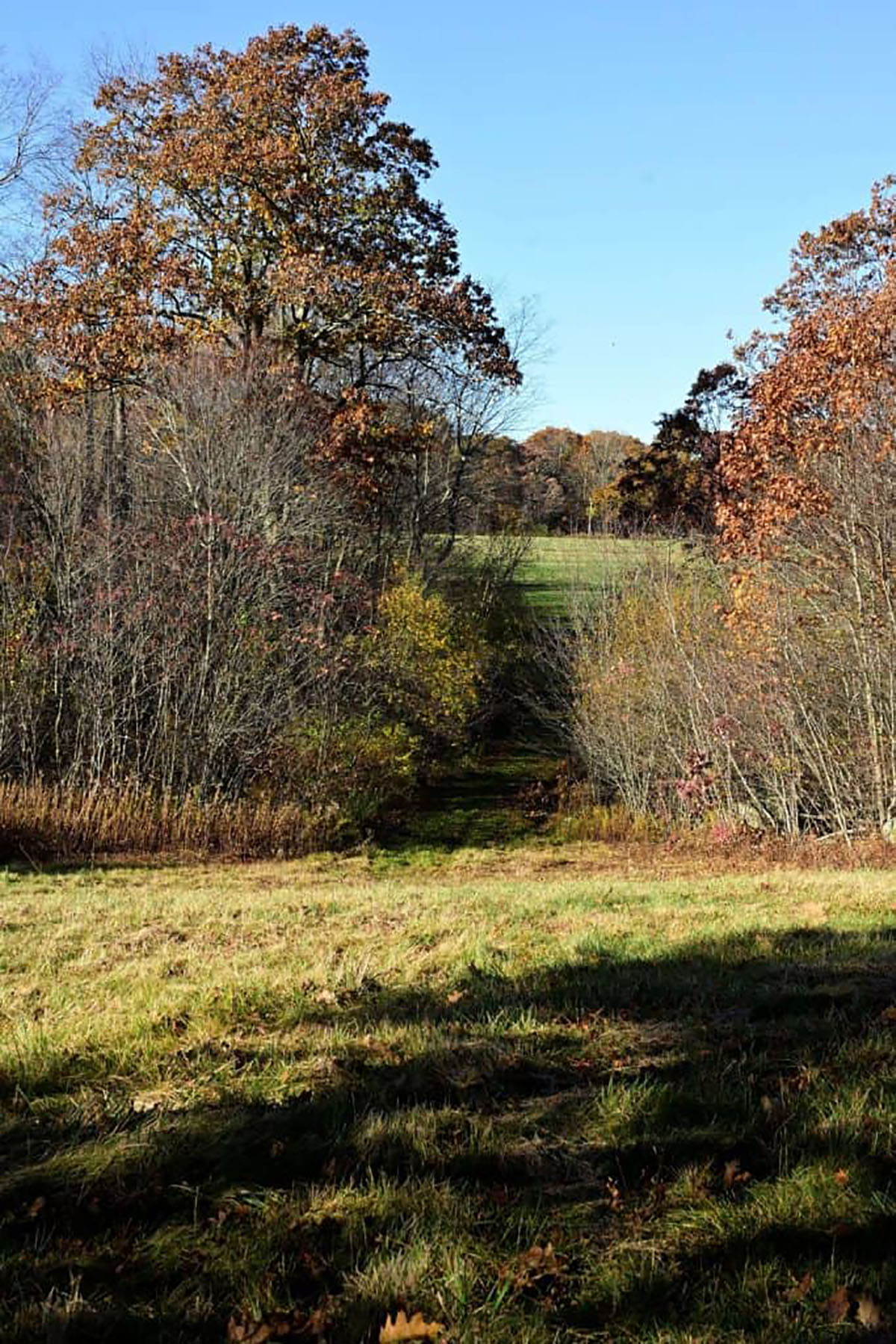
Every so often, a grant we make turns into something bigger than the check we wrote. That's exactly what happened this year with North County Land Trust (NCLT) and 32 acres of forest and wetland at High Meadow Farm in Hubbardston, MA, land that sits right in the headwaters of the Ware River Watershed.
Through our Environmental Preservation & Animal Welfare grantmaking, we backed NCLT's effort to permanently protect this land through a Conservation Restriction (CR). As NCLT told us directly, without our support for this specific project, they wouldn't have had the capital to get the project to the point where committing their own resources made sense. Our grant was the piece that got the whole thing moving.
Still, we didn't realize at the time how important that early support would be. Massachusetts' Conservation Land Tax Credit program, a key part of NCLT's plan to reimburse the landowners, usually takes two years to approve. NCLT didn't have two years. When another project unexpectedly dropped out of the program, a slot opened a full year ahead of schedule, and NCLT scrambled to get every piece of paperwork (appraisals, legal filings, the Baseline Documentation Report) finalized before December 31st. Because we'd already put capital behind the project, they were positioned to move fast when that window opened. On December 18, 2025, they recorded the Conservation Restriction, completing the project ahead of schedule.
That's 32 acres now protected in perpetuity. The CR guarantees Zone A surface water protection for the Ware River Watershed, the drinking water source for downstream communities. It links directly to the Department of Conservation and Recreation land and the Bratko family's existing Agricultural Preservation Restriction, knitting together a larger, unbroken forest corridor. It preserves unfragmented habitats that support wildlife movement and long-term carbon storage. And it opens public, passive-recreation trail access from Gardner Cutoff Road, connecting hikers to DCR land beyond.
None of it happens without the landowners saying yes. Tom and Jassy Bratko donated the restriction on land their family has cared for generations, and Jassy captured why: "Tom and I have always believed we don't really own our land — we just lease it for the time we are here, and it is our responsibility to care for it in the best way we can... Being given the ability to conserve it by North County Land Trust, and ensure that it is never developed, means we know that it will be enjoyed by future generations of people who can continue to explore the recreational opportunities and benefit from the diverse ecosystems that it supports."
Their generosity was met by more community goodwill along the way. When the contractor hired for the Baseline Documentation Report realized the project was in his own hometown of Hubbardston, he donated nearly all his services, stretching the funding even further.
This is the kind of ripple effect we hope for in every grant we make. The project's success has already inspired a new donor to step forward, hoping NCLT can replicate this model elsewhere, meaning our initial investment is already multiplying its impact.
High Meadow Farm is just one piece of what NCLT is building across the region. We're proud that our funding gave this project the foundation it needed to move quickly when opportunity knocked, and we're grateful to organizations like NCLT for turning our grants into permanently protected land, clean water, and open trails for our communities.
Financial Focus®
Building your child's education fund, one brick at a time
Every solid house starts with a good blueprint and a strong foundation. Saving for a child's education is very similar.
College costs can seem daunting. In addition to tuition, you'll need to account for housing and food, books and supplies, transportation and other expenses. The average annual budget at an in-state public university runs around $30,990 today, and a private school is $65,470 according to the College Board. While most families won't pay a college's list price, you'll still want to start saving as early as possible to be ready when your child is.
Lay the foundation early. You don't have to wait until you have the perfect set of plans to start building. There are specific accounts designed to save for education and some do not require a minimum opening deposit. Setting up automatic recurring contributions, even modest ones, lets you build steadily over time without requiring constant attention.
As your child ages, look for ways to redirect expenses you no longer have towards the build. For example, daycare costs, which can exceed $1,000 a month, can be shifted into a college savings account once your child enters school. Tax refunds and annual bonuses make excellent additional contributions. And others can pitch in--instead of birthday or holiday toys, ask grandparents or relatives to contribute directly to a college savings account.
Know the size of the house you're building. Families saving for community college followed by two years at a public university might target around $65,000. Those aiming for four years at a public school are looking at roughly $100,000. Whatever the goal, plan for education inflation of about 4% annually, which can roughly double costs over 18 years.
You don't have to source all the building materials yourself. Scholarships, grants, student loans and income from part-time work are all legitimate ways to help finish the structure.
Don't let one project consume the whole budget. One risk for parents is pouring so much into the college fund that the retirement fund goes neglected. Remember, loans and grants exist for college, but not for retirement. Striking the right balance may mean targeting a more affordable school, planning to cover only a portion of costs or adjusting retirement timelines slightly.
Choose the right building materials. For many families, a 529 plan is the right foundation. Earnings grow tax-free, distributions are federally tax-free when used for qualified education expenses, and many states offer additional income tax deductions for contributions. Even better, anyone--such as grandparents or friends--can contribute.
Additionally, qualified expenses for a 529 plan go beyond tuition and cover books, computers, internet access, room and board, and more. Vocational and trade schools often qualify, too, opening the door to careers in skilled trades, healthcare and technology.
No contractor builds alone. A knowledgeable financial advisor can help you draw up a realistic blueprint and make sure the college project doesn't crowd out the rest of your financial future. The earlier you break ground on that conversation, the stronger the structure will be.

This content was provided by Edward Jones for use by Jordyn Lynds, your Edward Jones financial advisor at 978-297-7452 or stop by 113 Central St. Winchendon, MA 01475.
Edward Jones is a licensed insurance producer in all states and Washington, D.C., through Edward D. Jones & Co., L.P. and in California, New Mexico and Massachusetts through Edward Jones Insurance Agency of California, L.L.C., Edward Jones Insurance Agency of New Mexico, L.L.C., and Edward Jones Insurance Agency of Massachusetts, L.L.C.
Gardening
Managing Powdery Mildew on Garden and Indoor Plants

Powdery Mildew on Cinderella's Carriage Squash.
Photo courtesy of www.MelindaMyers.com
Whether gardening indoors or outdoors, gardeners are likely to encounter powdery mildew on one or more of their plants. First, a white powdery substance will appear on the surface of leaves, stems and flower petals. As the powdery mildew expands and covers the leaves, it blocks sunlight from reaching the leaves inhibiting photosynthesis. As the disease progresses, it develops structures that enter plant cells to obtain nutrients. It usually is not fatal but severe infestations can cause plant leaves to yellow, twist and discolor and the plant may decline.
Several closely related fungi are responsible for the group of diseases called powdery mildew. Different species of powdery mildew fungi attack different plants. If the weather conditions are right and the various fungi are present, gardeners may find powdery mildew on a variety of plants in their landscape or indoor garden.
Watch for powdery mildew on azaleas, crabapples, dogwoods, lilacs, photinia, roses, coral honeysuckle vines and other trees, shrubs and vines. Check beebalm, dahlias, peonies, phlox, zinnias, cucumbers, squash and other susceptible plants in gardens. Indoors, especially during the winter, monitor African violets, begonias, ivies, jade and kalanchoes that may develop this disease.
Unlike many fungal diseases, powdery mildew fungi need high humidity not wet leaves to develop. Their spores also form in high humidity and are distributed when the humidity is low.
Powdery mildew is more likely to occur on indoor plants growing in low light with poor air circulation and cooler temperatures near 70° F. Although the disease is more common in winter the disease can occur any time these conditions exist.
Reduce the risk of powdery mildew by keeping plants healthy and avoiding overfertilization. Provide plants with the needed light and other preferred growing conditions. Properly space landscape plants and avoid overcrowding plants, indoors and out, to provide sufficient light penetration and air circulation.
Water new plantings thoroughly and often enough to keep the roots moist. Gradually reduce the frequency to encourage the plants to develop a robust root system. Continue to water established plants thoroughly as needed during dry weather.
Further decrease the risk of this disease with a bit of spring thinning on phlox and beebalm. Remove about ¼ of the phlox and beebalm stems in early spring to allow more air and light to penetrate the plant. This strategy will encourage sturdier stems and discourage disease problems.
Select mildew resistant varieties of these and other plants prone to this disease. Resistant plants are not immune but are less likely to develop the disease than those that are not.
Practice sanitation by removing infected leaves and plant debris where the fungal spores overwinter. As temperatures rise above 60°F the spores may begin to germinate.
With proper care and sanitation healthy perennials, shrubs and trees, especially those infected late in the growing season, will return the following year. Masking the diseased foliage with a somewhat shorter plant is one way to enjoy the flowers while dealing with the disease. If opting to treat the disease, select the most eco-friendly product, apply it at the first sign of the disease and repeat as directed. As always, read and follow label directions.
Melinda Myers has written over 20 gardening books, including The Midwest Gardener's Handbook, 2nd Edition and Small Space Gardening. She hosts The Great Courses "How to Grow Anything" instant video series and the nationally-syndicated Melinda's Garden Moment radio program. Myers is a columnist and contributing editor for Birds & Blooms magazine. Her website is www.MelindaMyers.com.